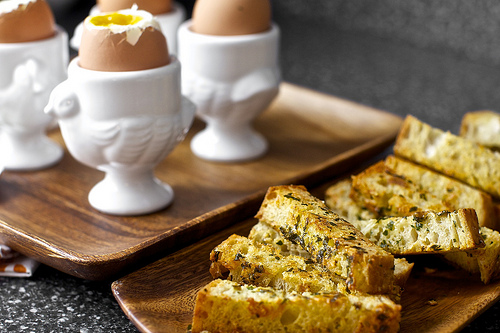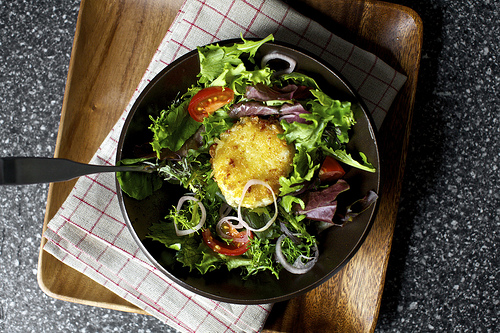
warm, crisp and a little melty salad croutons
You know all of those cooking shows and recipes (ahem, like ones on this very site — guilty!) that suggest cooking with wine is really fun because once you’ve opened a bottle for cooking, you get to drink the rest? Then there’s a series of “ah-ha-ha!”s and LOLs; it’s all very raucous. And look, people, I love a glass of wine with dinner from time to time but fact is, a lot of the time I open a bottle of wine for cooking, we forget to finish it, and this makes me very, very sad.
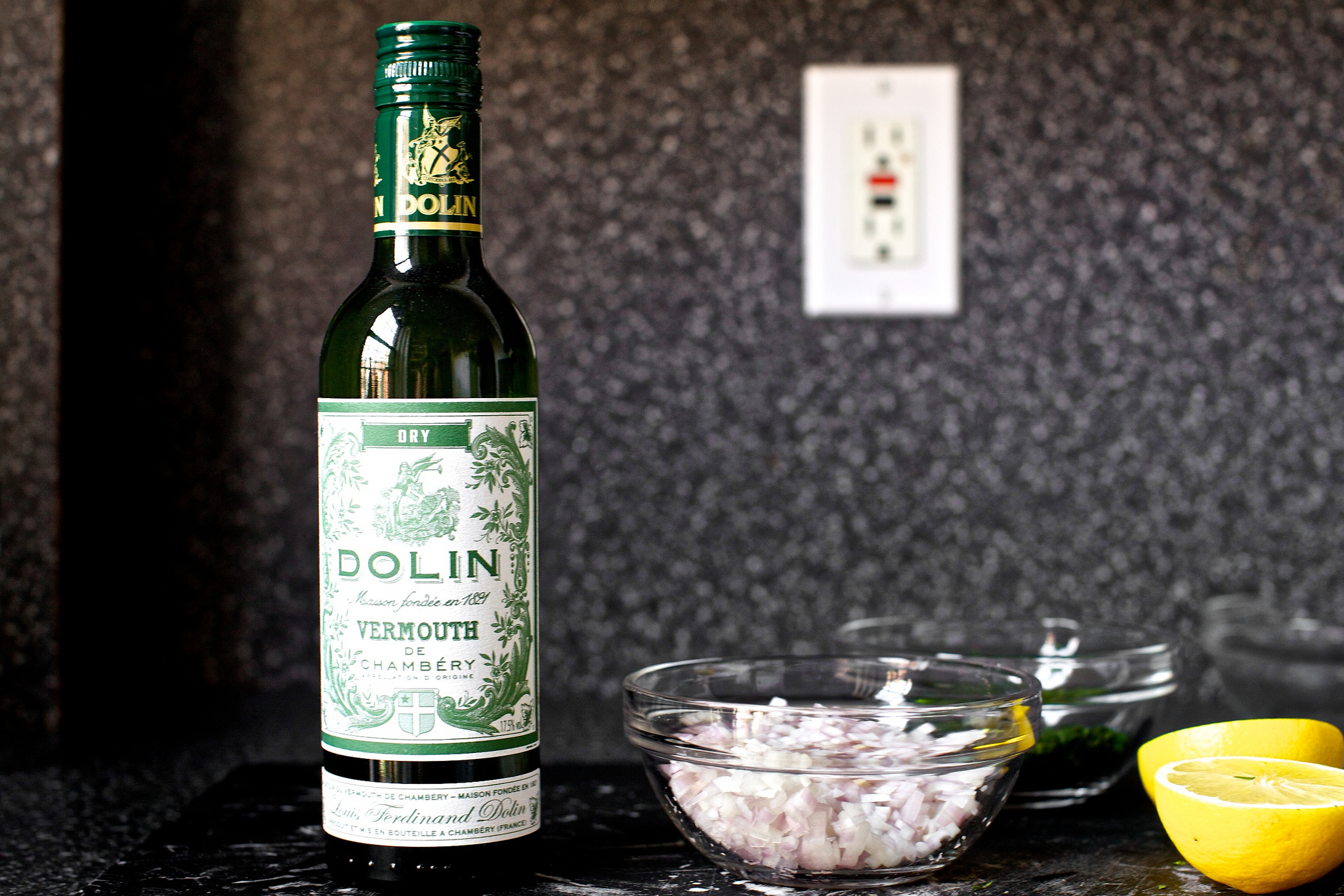
Enter dry vermouth. (The other variety of vermouth, usually red or pink, is called “sweet,” I like that, in part, for Manhattans, not that you asked.) Vermouth is a fortified white wine that is mildly aromatized with a variety of “botanicals,” such as herbs, spices, and fruits. Apparently, the word vermouth is derived from the German word for wormwood, wermut, as wormwood was the chief flavoring ingredient for vermouth until the herb was found to be poisonous, which I am sure was tremendously awkward. Nevertheless, the main reason I like to have vermouth around is its shelf life. When stored in the fridge (and you should, because this extends its shelf life), dry vermouth is good for anywhere between three and six months. (Sweet vermouth will keep for a year this way.) This means if you need just a splash here or there for a recipe, you don’t have to uncork a bottle of wine you may not finish before it quickly turns. Vermouth is also a lot less expensive than drinking wines. Gallo, the favorite in a Cook’s Illustrated taste test, costs only $5 for a 750ml bottle. The fancy-pants Dolin brand I picture above, almost considered too nice for everyday cooking, was $16.
A few usage notes: Vermouth’s flavor is of course a little different from a straight white table wine, due to the herbs and spices, so it may not be for everyone, but I find it to be lovely when cooking savory dishes. Due to the fortification, vermouth has a slightly higher percentage of alcohol than white wine (16 to 18 percent versus wine’s 12.5 to 14.5 percent), which means if you’re trying to partly “cook off” the alcohol it may need an extra minute of simmering time. But I find that it can be seamlessly interchanged with wine in just about any recipe, and deliciously so.
When I was 32 weeks pregnant in the summer of 2009 (in fact, this was overflowing on my kitchen counter during my first meeting across town) and should have been doing normal third trimester things like eating jars of Peanutella by the spoonful and repainting the baseboard trim (which still looks awful, not that this will surprise you), I instead decided that I really wanted to write a cookbook. Because new mothers are swimming in free time (“new babies are always sleeping!”), I thought I would finish the book in six months; nine, tops. Stop laughing. Quit it.
As an Amazon Associate I earn from qualifying purchases. Privacy Policy