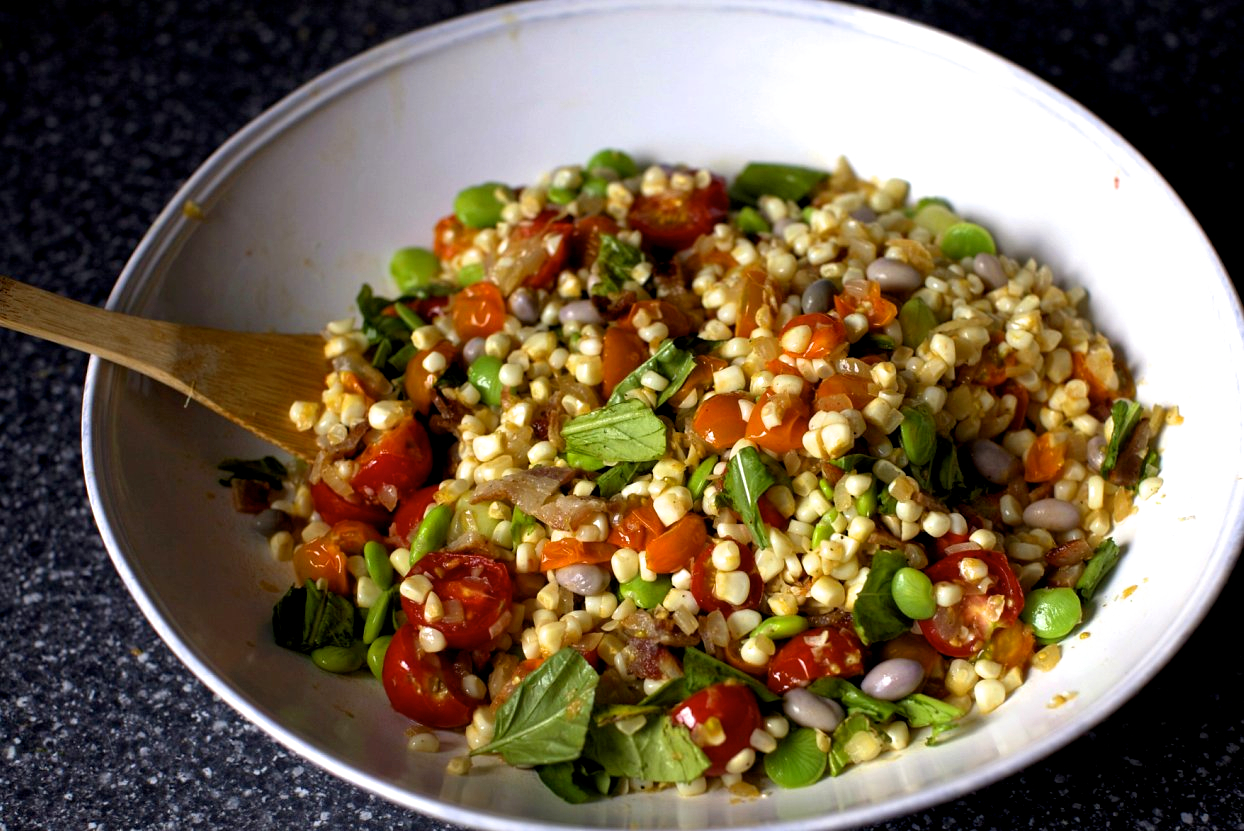
summer succotash with bacon and croutons
This is the ugliest, best thing I have ever made with three ingredients and the happy ending to three weeks of obsessing. And here you probably just thought it looked like an accident, didn’t you?

[Updated in 2021] Have you ever used kosher salt in a recipe and found the end result to be like a salt lick and you couldn’t imagine how on earth a recipe tester could have not noticed how horribly, horribly oversalted the dish would end up? Let me guess: You weren’t using Diamond Kosher Salt, a favorite of chefs, test kitchens, and the Smitten Kitchen. I know: Now we tell you!
Does this mean you should change brands? Absolutely not. There is no need to hunt down Diamond brand if it’s not available or is preposterously expensive where you are. But if you’d like to know how to adjust for this in recipes where one is measuring salt by the spoonful, you’ve come to the right place.
First, here’s the basic math on salt weights:
1 teaspoon table salt = 6 grams
1 teaspoon Diamond kosher salt = 2.8 grams
1 teaspoon Morton kosher salt = 4.8 grams
1 teaspoon David kosher salt = 6 grams (i.e. the same as table salt)
Or, in plain language:
1 teaspoon table salt has the same saltiness as 2⅛ teaspoons of Diamond.
1 teaspoon Morton kosher salt has the same saltiness as 1¾ teaspoons of Diamond.
1 teaspoon David kosher salt has the same saltiness as 2⅛ teaspoons of Diamond.
“But aack, this stresses me out because how am I supposed to know what a recipe tester used?” Here’s my advice: Pretend they used Diamond salt and if using any other brand, start with half. We can always increase the amount of salt later (and hey, “season to taste” is the gold standard for a reason) but scrubbing it out is not an option.
As an Amazon Associate I earn from qualifying purchases. Privacy Policy