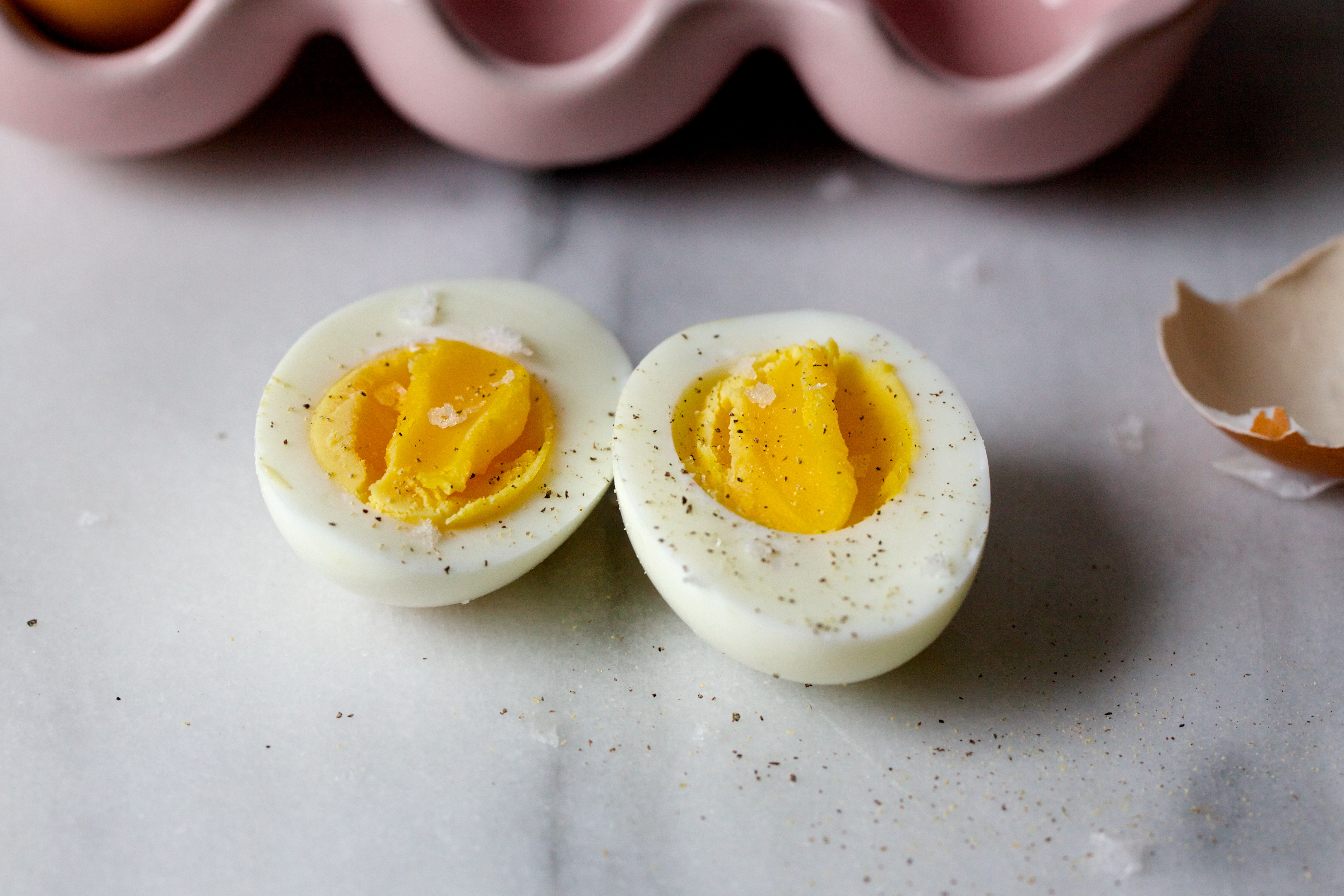
how to hard-boil an egg
[Updated] There are about as many techniques for hard-boiling eggs as there are eggs out there, but until 2017, I used the method my mother taught me because it never fails: Submerge a large egg in enough cold water to cover it and bring the water to a boil over medium-high heat. Once it begins to boil, set a timer for 10 minutes. Plunge the egg into cold water to get it to stop cooking. Plus, cold eggs are much easier to peel.
However, the trickiest part was always knowing when the water starts to boil. How would you if you weren’t standing over watching it, and we all know how that goes. In 2017, I realized that I could gently lower an egg into already boiling water and do almost exactly what’s written above — cook it for 10 minutes then plunge it into cold water, except now I use ice water and let it rest in there until it’s completely cold through, about 15 minutes — and it not only perfectly boils and egg, no pot-watching required, but it seemed to peel even more easily. I wondered if there was any science to it and whoa, there is.
Both my mom’s method and this new one work splendidly, and I promise will work for you, but I’m now fully converted to the newer method, because it’s easier and easier to peel.


Hard-Boiled Eggs
- Bring a pot of water deep enough to cover large eggs, cold from the fridge, to a boil.
- Gently lower egg(s) into it. Definitely use a spoon and don’t assume you can gently drop it with your fingers. Trust me, this leads to burnt fingers and cracked eggs.
- Cook for 10 minutes, or, if you’re me, only 9 because you want eggs that look like the top picture here, a little darker in the center. You can lower the heat to a simmer if you wish, but I find it has no effect on the final egg.
- Plunge them in ice water until they’re fully cold, about 15 minutes. If the ice melts, add more to ensure the water stays very cold.
- Eggs should peel easily but if they gives you any resistance, peel them under running water.